Read the full newsletter here
Real estate and family offices: emerging alliances and opportunities
In a market environment undergoing profound transformation, Family Offices are emerging as increasingly strategic partners for the real estate sector. At a conference organised by LuxReal in collaboration with Deloitte and IQ-EQ, experts and practitioners shared their perspectives on current trends, opportunities and upcoming challenges, with a particular focus on the role of Luxembourg.
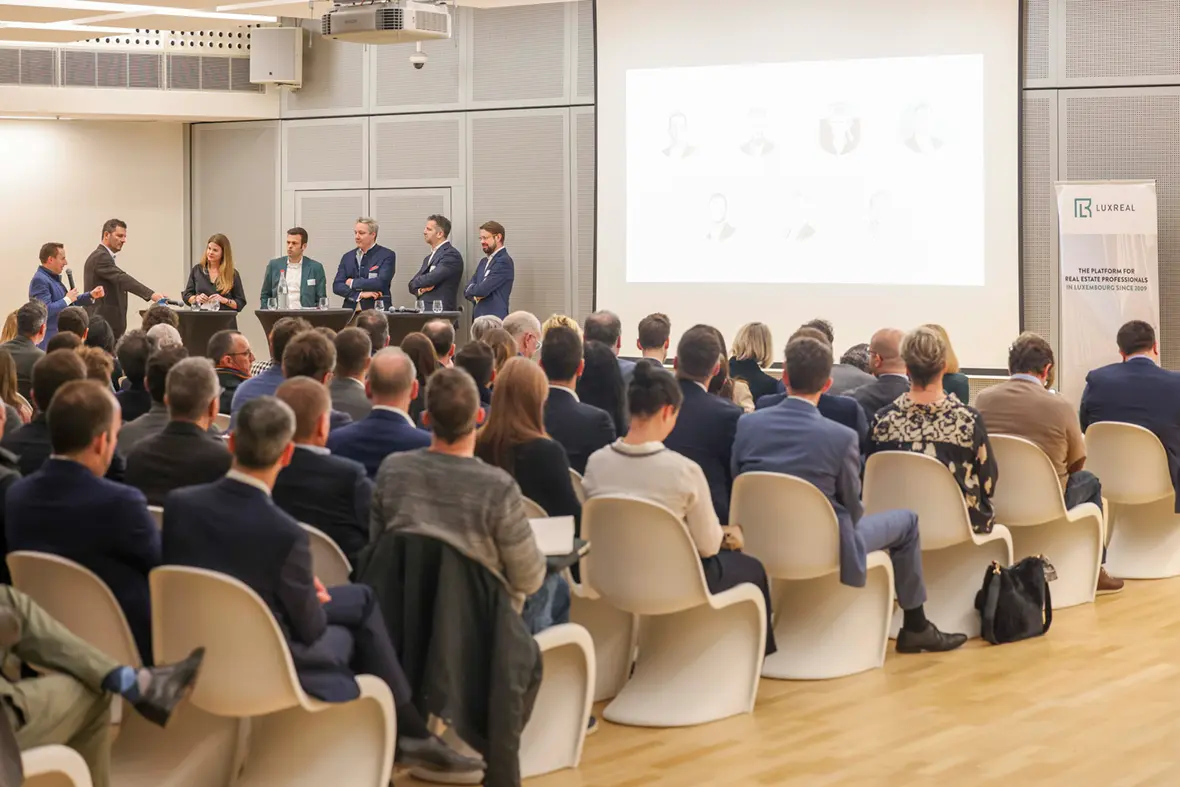
For its first conference of the year, LuxReal, Deloitte and IQ-EQ chose to highlig the role of Family Offices in connection with the real estate sector. More than 170 guests gathered at Technopolis on Thursday evening, 15 January, confirming the strong interest in the topic.
“Real estate is not just an asset class. It is also a key lever for capital structuring, a long-term driver of wealth creation and a particularly valued tool for wealth transfer,” said Romain Muller, President of LuxReal, explaining the continued appeal of real estate for wealthy families in an investment landscape marked by profound change.
“In this environment, the Luxembourg ecosystem has developed complementary expertise to help families fully grasp the complexity of real estate investment, encompassing operational resilience, sustainability considerations, wealth governance and regulatory compliance,” added Diana Senanayake, Managing Director of IQ-EQ Luxembourg and partner of the event.
Private Capital Growth in Real Estate
There is no denying that real estate investment dynamics have changed significantly in recent years. Faced with a major crisis—combining market uncertainty, a more cautious stance from institutional investors and increasing difficulties in accessing project-related financing—real estate players are exploring new approaches.
In this context, Family Offices are emerging as preferred partners to support projects and transactions. This trend is reflected in the growing interest of families in real estate as an asset class, according to indicators shared by Tamas Mark. According to the Head of Real Estate at IQ-EQ Luxembourg, private capital fundraising in real estate, after declining sharply in recent years, is expected to recover in the coming years.
“Based on Preqin data, at a global level, fundraising in real estate is expected to grow by an annualized average of 6.92% year-on-year until 2030, while infrastructure fundraising should increase by 12.52%,” he explained. “Private debt investment, often associated with real estate transactions, is expected to grow by 9.73%.”
10% to 15% of Family Portfolios Allocated to Real Estate
From a regional perspective, Europe (+12.21%) and Asia-Pacific (+14.13%) are expected to benefit the most from the growth in real estate fundraising. Increasingly, these transactions are channelled through Family Offices—structures that support wealthy families in the overall management, structuring and planning of their assets.
Family Offices are becoming increasingly numerous in Europe and particularly in Luxembourg. “In recent years, we have observed a significant increase in the proportion of European Family Offices investing in real estate. In terms of asset allocation, real estate now represents between 10% and 15% of European wealthy families’ portfolios,” Tamas Mark continued.
According to data shared by Deloitte, the preferred investment strategies are opportunistic (31.9% of families) and value-add (30.3%).
An Increasingly Structured Family Office Landscape
It is therefore easy to understand the growing interest of real estate players in Family Offices, which have become key partners for the development of projects. According to Amandine Morel, M&A Tax Director and Family Office Team Leader at Deloitte Luxembourg, there are currently more than 8,000 Family Offices worldwide, managing approximately USD 3.1 trillion in assets.
These figures are expected to rise significantly by 2030, reaching more than 11,000 Family Office platforms and approximately USD 5.4 trillion in assets under management. Amandine Morel also highlighted several trends shaping Family Office investment strategies.
“We are seeing a reallocation of assets towards alternative investments, which should represent between 40% and 49% of portfolios, driven by the need to protect against market volatility, seek performance and hedge against inflation,” she explained. “There is also stronger international diversification, along with a desire to invest directly or co-invest in assets to maximise returns. Intergenerational wealth transfer and succession planning are also key considerations. Finally, we are witnessing increasing professionalisation and institutionalisation of asset management, particularly through Family Offices.”
Luxembourg, an Attractive Platform for Family Offices
“In Europe, Luxembourg is positioning itself as an increasingly attractive platform for Family Offices,” said Amandine Morel. “Our expertise in alternative investments, combined with the country’s stability and a ‘toolbox’ offering great flexibility, numerous structuring options and strong investor protection, continues to attract players with sophisticated needs.”
Real Estate and Family Offices: Strengthening Synergies
The panel discussion, moderated by Yves Knel, M&A Tax partner held during the conference, brought together real estate professionals and representatives of Family Offices based in Luxembourg, provided an opportunity to explore closer collaboration between the two worlds. Pascal Rapalino, Chairman of the Luxembourg Association of Family Offices, confirmed the Grand Duchy’s appeal to both single and multi-family offices, which are increasingly establishing structures in the country.
What makes Luxembourg attractive? “Its international environment, a unique combination of prosperity and stability, as well as its extensive network of double taxation treaties,” commented Arnaud Decrulle, Managing Director of Maison Worms, a single Family Office established in Luxembourg. Within the portfolio he manages, 10% of assets are invested in real estate, primarily in value-oriented projects, notably in Luxembourg.
For developers such as LuxRED, represented on the panel by Founding Partner Aurélie Frédureau, Family Offices are therefore partners of choice for structuring and developing projects. “They are entrepreneurial counterparts with whom we benefit from direct communication and agile decision-making processes. Family Offices do not focus solely on financial returns; they adopt a long-term vision and place strong emphasis on the quality of the real estate assets in which they invest,” she explained.
New partnerships involving Family Offices and bank financing solutions—highlighted by Tobias Beck, Head of Credit Portfolio & Syndication at BIL—must therefore be explored in order to meet families’ expectations while supporting the Luxembourg real estate market.
Real Opportunities, but Challenges Remain
Challenges remain significant. “Platforms supporting families are looking for very specific deals,” explained Pascal Rapalino, who has been involved in various transactions, including the acquisition of a five-star hotel in Paris and a prime property in Luxembourg. “More and more, families are also showing interest in new developments, which could be positive news for Luxembourg.”
While acknowledging the appeal of real estate, Arnaud Decrulle pointed to difficulties in sourcing opportunities. “Market access can be challenging due to low asset liquidity and a lack of transparency,” he noted. “The main challenge remains securing access to the most attractive deals.”
For Aurélie Frédureau, a return to more positive market momentum should create new opportunities. “In this context, it is up to us to build relationships with the right partners to support the recovery, at a time when the market and access to financing are becoming increasingly complex,” she said.
Strengthening the Ecosystem to Remain Internationally Competitive
According to Tamas Mark, regulation—particularly stringent AML/KYC requirements—will represent a challenge in the future. And while Luxembourg is attracting an increasing number of Family Offices and positioning itself as a preferred platform for structuring alternative investments, as highlighted by David Zackenfels, Senior Vice President Legal at ALFI, it is essential not to rest on existing strengths and to continue enhancing the ecosystem in order to remain competitive on the international stage.
Back to the full newsletter here