Read the full newsletter here
‘We need to move from siloed frustration to shared solutions’
A new member of LuxReal's Executive Board, Muriel Sam brings more than twenty years of experience in Luxembourg's real estate development sector. As Managing Director of Immobel Luxembourg, she advocates for a more collaborative and resilient industry, one that can address housing challenges while strengthening the country's long-term attractiveness and competitiveness.
Can you introduce yourself and tell us a bit about your career?
I'm Muriel Sam, Managing Director of Immobel Luxembourg. My career in real estate spans over two decades, with a strong focus on development in Luxembourg, including 12 years at Iko Real Estate before joining Immobel 11 years ago. Today, Immobel Luxembourg has 160 apartments and 120 co-living units under construction, with another 560 homes in development, almost entirely in Luxembourg City. I hold a Master of Project Management from Northwestern University and a Diplôme d'Ingénieur from Ecole Spéciale des Travaux Publics. What drives me, throughout all of this, is the conviction that real estate must be a force for good, contributing to sustainable, inclusive, and vibrant communities. That belief has shaped every step of my professional journey. On a more personal note, I am a mother of five, which perhaps says something about my appetite for ambitious projects.
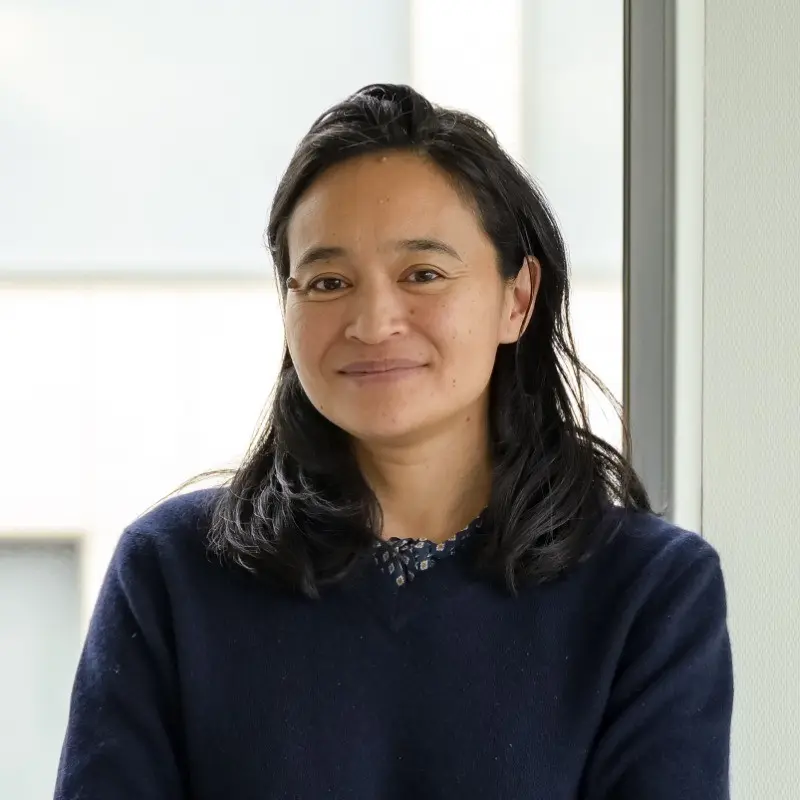
Muriel Sam
Managing Director, Immobel Luxembourg
Executive Board Member, LuxReal
Why did you decide to join the LuxReal board? How would you like to contribute to the association?
Joining LuxReal's Executive Board felt like a natural step at a pivotal moment for our industry. LuxReal has always been the place where the real estate community comes together to learn, exchange, and grow. I want to help strengthen that role, and go further. I hope LuxReal can help our sector reinvent itself: not just respond to the crisis, but emerge from it with new models, new approaches, and a clearer sense of its role in Luxembourg's future.
I also bring the perspective of a developer who works closely with public institutions. Some of our most significant projects have been structured around close collaboration with public partners. River Place was acquired by the City of Luxembourg in VEFA, and a large part of the Kiem project was developed with and for the Fonds Kirchberg. That experience of bridging public and private interests is something I hope to bring to LuxReal's community. I also believe there is an opportunity to invite public stakeholders to contribute more actively to our conversations, not necessarily as members, but as voices that enrich our collective thinking. We need each other.
What does LuxReal mean to you? Why is this association essential today?
LuxReal brings together real estate professionals across all disciplines : developers, investors, banks, architects, service providers. That breadth matters enormously right now. The challenges we face cannot be solved by any single actor in isolation. We are all in the same boat. LuxReal provides the forum to move from siloed frustration to shared solutions, through education, through debate, through connection. In a market under pressure, that kind of structured, cross-disciplinary dialogue is not a luxury : it is a necessity.
What is your view of the Luxembourg real estate market today and, more generally, of the development of the real estate business from Luxembourg?
The market is in a difficult place, and I won't pretend otherwise. The new-build segment remains particularly fragile. Transaction volumes in VEFA are still well below pre-crisis averages, and many projects are being delayed or shelved because the economics don't stack up at current financing costs and construction prices. Credit conditions remain tight, and evolving prudential frameworks are not making things easier.
That said, I believe in the cyclical nature of things. Real estate has always moved in cycles, and we have navigated difficult ones before. What gives me a degree of confidence is that the underlying demand for housing in Luxembourg remains structural and real. The country continues to attract talent, families need homes, and that fundamental equation doesn't change. I also see a real willingness among market participants to adapt, innovate, and collaborate in ways that weren't as common five years ago. Luxembourg's real estate market has matured. That maturity will be an asset as we navigate the recovery.
I do want to be honest, though: what can be read as stabilisation feels fragile to me. The geopolitical context is deeply uncertain, the interest rate environment is far from the conditions we knew before 2022, and any external shock could set back the recovery. This is not a time for complacency. It is a time for clear-headed realism, and for acting on the levers we do control.
What do you see as the main challenges facing the sector in the coming months?
The most critical challenge is not just for the real estate sector. It is for the Luxembourg economy as a whole. Housing production is infrastructure. Without a functioning pipeline of new homes, Luxembourg cannot attract the talent it needs, cannot sustain its competitiveness, and cannot support the workforce its economy depends on. Every project postponed today means further supply shortage in two or three years, with the price pressures that inevitably follow.
Addressing this requires action on two fronts. The sector itself must think harder about affordability, about how to make homeownership and quality rental housing accessible to the people Luxembourg needs. That means exploring new financial models for buyers and being honest about the fact that our industry's long-term health depends on serving a broader range of people, not just the top of the market.
What needs to happen beyond the real estate sector itself to support a sustainable recovery?
The sector cannot do this alone. The role of government is decisive. Luxembourg has a proud track record of supporting its economy through difficult periods, and meaningful steps have already been taken to stabilise the market. More is needed, however. Fiscal incentives for new construction need to be extended and deepened. The permitting environment needs to keep improving. And the overall conditions for housing production need to be addressed with the same pragmatism Luxembourg has shown in other economic challenges. I say this not in a spirit of criticism, but of confidence.
What message would you like to bring to LuxReal's members as you join the Executive Board?
Luxembourg knows how to find solutions. That capacity for collective, pragmatic problem-solving is one of this country's greatest strengths. Affordable housing is not just a social issue: it is the foundation of this country's attractiveness and competitiveness, and the talent Luxembourg needs will only come if they can find a home here. The window for action is now. And I'm convinced that if we act together, public and private alike, we will come through this cycle stronger. That is the spirit I bring to LuxReal's Executive Board, and the spirit I hope will carry our sector forward.
Back to the full newsletter here